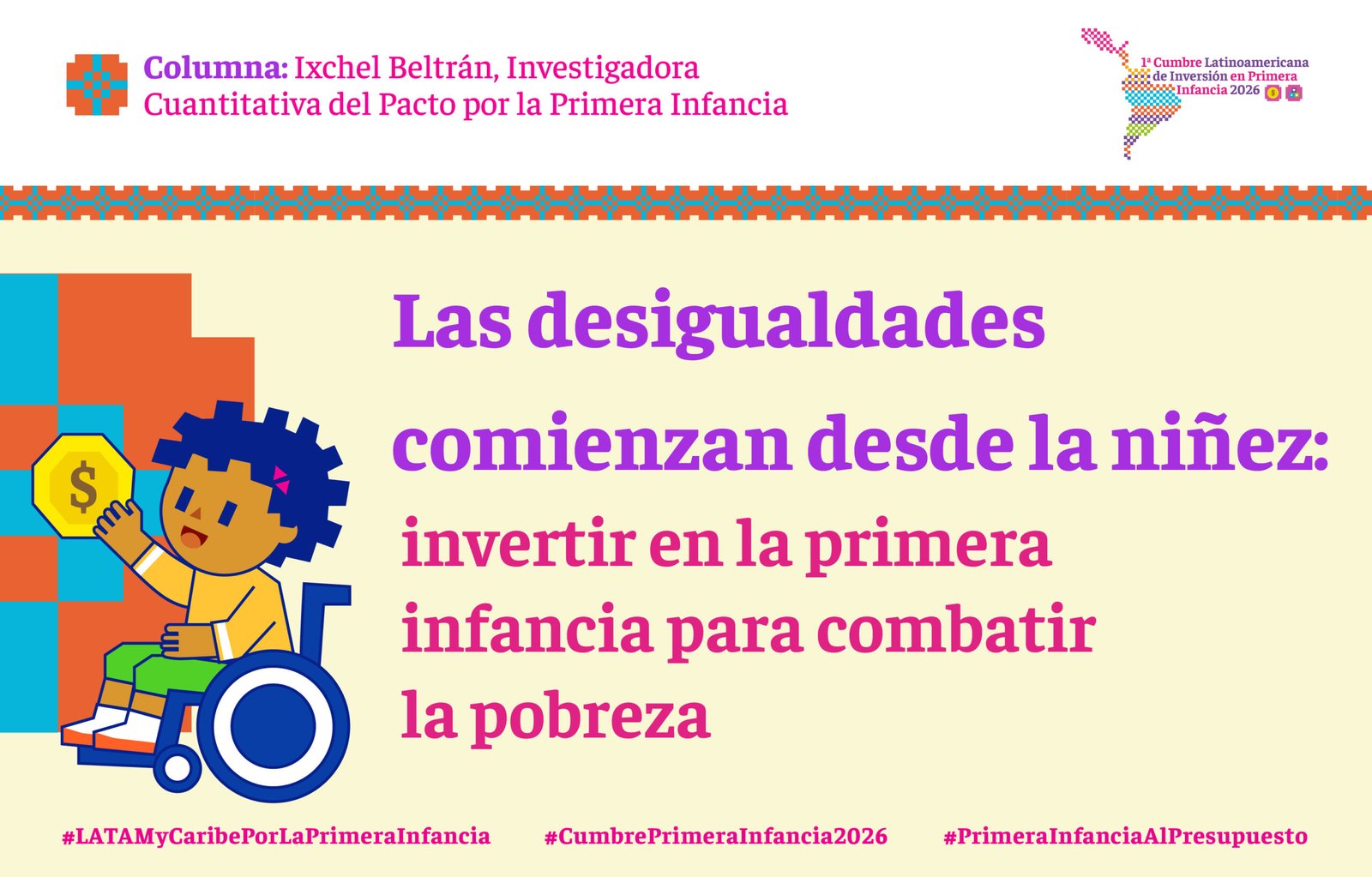
In Mexico, a child’s place of birth, family income, and the services available to their family and community all influence their chances of growing up healthy, learning, and developing their abilities. Poverty does not just mean a lack of money at home; it can also mean a lack of nutritious food, timely medical care, social security, safe housing, basic housing services such as clean drinking water, or educational services.
In 2024, 4 out of every 10 children under the age of five (41.9%) were living in poverty, with early childhood being the age group most likely to find itself in this situation in the country. Behind this percentage lie nearly 5.2 million stories in which opportunities begin to dwindle even before children learn to speak.
Early childhood is a critical stage for physical, cognitive, emotional, and social development; growing up in poverty increases the risk that these disadvantages will persist throughout life. Inadequate nutrition can affect growth and cognitive development. A lack of medical care can turn a preventable condition into a permanent disability. The lack of childcare services can force many families—especially women—to reduce their working hours or leave their jobs.
In the case of extreme poverty, a single child may face difficulties accessing health care, food, social security, housing, and education, in addition to having an income insufficient to meet their nutritional needs. Ensuring adequate conditions for children to grow up in is a responsibility that the government must lead; when we talk about poverty, it is not a matter of individual failure but of structural barriers: economic, territorial, and institutional.
The public budget reflects which issues are considered priorities, which populations receive resources, and which services are being strengthened. When investment in early childhood is insufficient, the consequences are evident in health centers lacking medicines or staff, communities without access to preschool education, and programs with limited coverage.
Currently, public investment in early childhood accounts for 0.61% of the Gross Domestic Product. Furthermore, the share of social spending allocated to children and adolescents decreased from 26.3% in 2018 to 17.7% in 2025; during the same period, spending on early childhood has remained at around 3.6%. This shows that it is still perceived as an expense rather than a strategic investment. Recognizing the importance of early childhood is not enough: that priority must be reflected in the allocation and use of public resources.
Investing in the early years should not be justified solely by its future benefits; children have the right to a good life now, even though addressing their health, nutrition, education, care, and protection in a timely manner reduces costs down the line, strengthens learning, and helps break the intergenerational cycle of poverty.
Making early childhood a budget priority requires a sustained increase in resources allocated to children under the age of six and the protection of essential programs. It involves combining adequate, high-quality public services with financial support; while cash transfers can improve family income, they are no substitute for a nearby clinic, vaccines, safe drinking water, healthy food, or early childhood education.
Mexico needs to move toward a child-centered care system. In 2024, coverage for these services reached just 13.2 percent; expanding it would promote child development, make it easier to balance work and parenting, and help reduce the inequalities faced by children and their families.
The budget must be allocated based on equity criteria: rural, indigenous, and highly marginalized areas require more resources, sufficient staff, and appropriate strategies. In addition to approving resources, they must be disbursed in a timely manner, reach the communities for which they were intended, and translate into goods, services, and verifiable results.
Combating poverty in early childhood means taking action before inequalities accumulate and become more difficult to overcome; investing in the early years means building a more just country from the very beginning; it means recognizing that every budget decision has an impact on the lives of millions of girls and boys.
The challenge of adequately funding early childhood is not unique to Mexico. In Latin America and the Caribbean, moving toward more equitable societies also requires that commitments to children be translated into concrete, sustainable, and results-oriented budget decisions.
In this context, from November 10 to 12 , Mexico will host the 1st Latin American Summit on Early Childhood Investment, which aims to advance a regional agenda that ensures sufficient and sustainable resources for children under the age of 6.
Investing in early childhood means building a more just country from the very beginning. It means recognizing that every budget decision has consequences for the lives of millions of girls and boys, and that guaranteeing their rights cannot depend on where they are born or on their families’ financial resources.